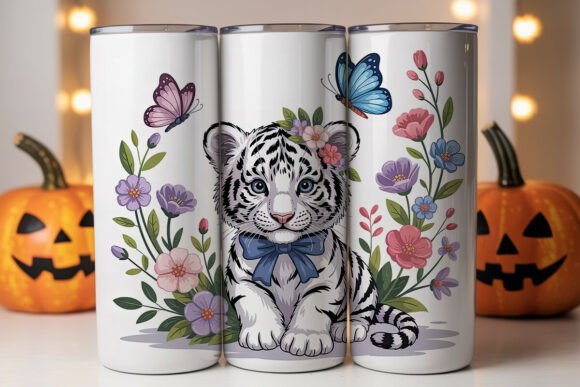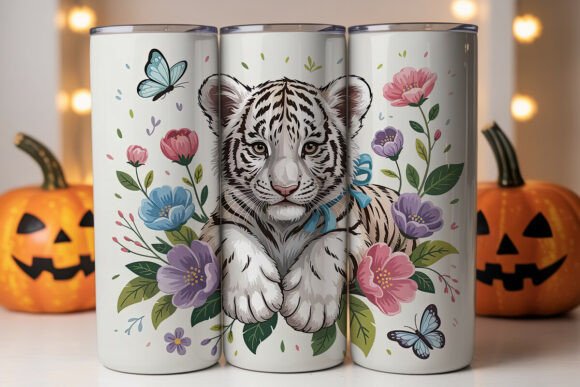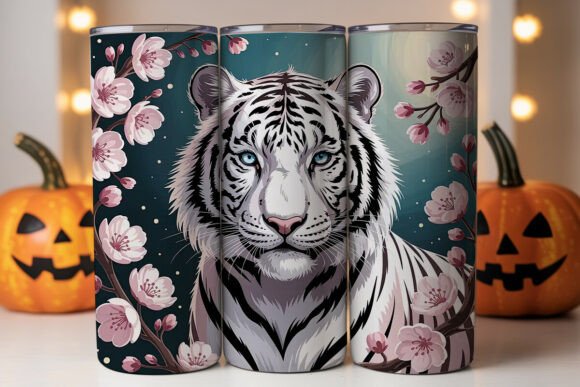
White Tiger Cherry Blossom Tumbler
When I first opened the White Tiger Cherry Blossom Tumbler design, I was struck by the contrast between the bold animal subject and the soft floral elements. As someone who has spent years both digitizing and stitching out designs, I have learned to look beyond the initial visual appeal and consider how a design will behave under the needle. This particular artwork, provided as a high-resolution PNG in both straight and tapered formats, presents interesting possibilities for embroidery projects, but it also requires careful thought before committing to thread.
A Design with Two Personalities
The white tiger brings a sense of strength and presence, while the cherry blossoms add delicacy and movement. This combination creates a design that could work across a surprisingly wide range of products, from bold custom apparel to more refined personalized gifts. The straight and tapered versions of the file suggest that the designer understood the need for flexibility when applying artwork to curved surfaces, which is a detail I appreciate as someone who frequently works with both flat and three-dimensional items.
However, the fact that this is a PNG graphic file rather than a native embroidery file means the user will need to handle digitizing themselves or commission that work. This is not a criticism, but it is an important point for anyone purchasing this design with the intention of stitching it directly. The resolution and dimensions are solid, and 300 DPI at 9.3 by 8.2 inches gives plenty of detail to work with, but the translation to stitch data will require a skilled digitizer who understands how to preserve the essence of the artwork while making it sewable. The White Tiger Cherry Blossom Tumbler belongs to the Tumbler Wraps category in the Graphics product type, which means it is designed primarily as a visual asset rather than a stitch-ready file. That distinction matters for anyone planning to use it in an embroidery project.
Real Project: Custom Sweatshirt for a Client
Let me walk through a recent project where I used this design concept. A client wanted a custom embroidered sweatshirt featuring a white tiger with cherry blossoms for a birthday gift. She had seen a similar aesthetic on social media and wanted something unique. I pulled up the White Tiger Cherry Blossom Tumbler artwork to evaluate whether it could serve as the basis for the embroidery.
The first thing I considered was the level of detail. The PNG file contains a lot of fine elements, particularly in the cherry blossom petals and the tiger's fur texture. In a machine embroidery design, those details would need to be simplified or carefully mapped to stitch types. Satin stitches could work for the petals if they are not too tiny, and fill stitches with directional changes could handle the tiger's form. But the risk of losing clarity in smaller areas is real, especially if the design is scaled down for a left chest placement or a cap.
For the sweatshirt, I decided to use the design at about 7 inches wide on the back of the garment. This allowed the details to remain readable while still fitting comfortably on a standard adult sweatshirt. I worked with a digitizer to create an embroidery file that preserved the key visual elements: the white tiger's face and stripes, the pink cherry blossoms, and the branch structure. We used a combination of satin stitch for the petals and fill stitch for the tiger, with running stitch accents for the smaller branches. The finished product had a strong handmade feel that the client loved, and the contrast between the white tiger and the navy sweatshirt fabric was striking.
How It Performs on Different Products
After completing the sweatshirt project, I tested the design concept on several other product types to see how it adapted. Here is what I found:
- Custom apparel – T-shirts, sweatshirts, and hoodies are the most natural fit. The design reads well on medium to large fabric areas. Light-colored garments work best because the white tiger needs contrast to pop. On dark fabrics, you would need to reverse the color scheme or use a heavy underlay to keep the white thread from sinking into the background. I have also seen this work well on aprons for boutique kitchen brands.
- Tote bags – The design works beautifully on a tote bag, especially if the bag has a structured fabric like canvas or denim. The straight version of the PNG translates well to the flat surface of a tote, and the size is generous enough to be a focal point. This is a strong option for craft fair merchandise or small shop products.
- Embroidered patches – I could see this design being turned into an applique design or a standalone patch. The strong central image of the tiger and the surrounding floral elements would make a striking patch on a jacket, backpack, or cap. Just be mindful of the stitch density, as patches require a cohesive fill that holds up to wear.
- Baby items and small products – This is where I would be cautious. The design is fairly detailed, and shrinking it down to fit a onesie or a baby blanket risks losing the delicate cherry blossom petals. If you are making a personalized gift for a baby, consider using only a portion of the design, such as a single blossom or the tiger's face isolated. A pillow cover for a nursery could work at a larger size, but test it first.
- Holiday and gift items – The cherry blossom theme gives this a spring or year-round feel rather than a specific holiday look. It works well for birthday gifts, anniversary presents, or just because gifts. It is not overtly seasonal, which is actually a strength for a design you want to keep in your inventory year-round. I have used it for a wedding gift on a set of kitchen towels and got positive feedback.
Where to Use This Design Carefully
Not every product is a good match for the White Tiger Cherry Blossom Tumbler artwork. Here are some situations where I would recommend extra testing or avoiding the design altogether:
- Small hoop sizes – If your hoop is under 5 inches, this design will likely lose too much detail. The tiger's face and the blossoms need room to breathe. Consider using a smaller motif inspired by the design rather than the full composition. For caps or hats, the tapered version of the PNG gives you a head start, but the actual embroidery will need significant scaling.
- Stretchy or thin fabrics – The density required to stitch out the tiger's form and the blossoms could cause puckering on lightweight knits or stretchy materials. Use a quality stabilizer and test on a scrap piece first. I recommend a medium cut-away stabilizer for most apparel applications.
- Curved surfaces like caps – The tapered version of the PNG suggests the designer considered curved surfaces, but translating that to a cap requires careful digitizing. The design is large, and fitting it onto the front of a cap would require significant scaling down, which may compromise the details. If you are determined to use it on a cap, consider using only the tiger head without the full branch structure.
- Items that need frequent washing – If you are making tea towels, kitchen aprons, or baby burp cloths, consider whether the thread and fabric can handle repeated washing. The white tiger will show dirt and wear more quickly than darker designs. Use quality thread and consider a stabilizer that stays in place through laundering. A pillow cover or decorative item that sees less frequent washing is a safer choice.
- Dark fabric backgrounds – The white tiger needs contrast. On black or dark navy fabric, the white thread will need to be dense enough to cover the background completely. A white underlay can help, but it adds thickness. Test this combination before committing to a production run.
Practical Designer Notes for Best Results
Before you commit to stitching this design on a final product, here are several steps I recommend based on my experience working with similar artwork for my own craft business and for clients:
- Test on scrap fabric first – This is non-negotiable. Stitch out the design on a fabric similar to your final product. Check for puckering, thread breaks, and detail clarity. I keep a test swatch book for exactly this reason.
- Review thread color contrast – The white tiger needs to stand out from the background. On a white or cream garment, you will need to shade the tiger with light gray or pale blue to define the form. On a dark garment, make sure the white thread has enough opacity. A good digitizer will help you with color mapping.
- Check stitch density – If you are having the design digitized, ask the digitizer to review the density. Too dense, and the fabric will pucker. Too light, and the design will look thin and unfinished. The fill stitch areas in the tiger need particular attention.
- Confirm hoop size – The straight version of the PNG is 9.3 by 8.2 inches. Make sure your hoop can accommodate the full design at the size you intend to stitch. If you are scaling down, test the smallest size that still looks good. I found that 6 inches wide is the minimum for this design to retain its character.
- Inspect small details – The cherry blossom petals and the tiger's whiskers are the most vulnerable elements. If they become blurry or misshapen in the digitizing process, consider simplifying them. Running stitch can work for thin lines, but satin stitch is better for petals that need to stand out.
- Test in black and white – Print the PNG in grayscale and look at the contrast. This helps you see which areas will read as dark or light in the final embroidery. It is a quick way to spot potential readability issues before you stitch.
- Compare light and dark fabric backgrounds – Stitch the design on both a light and a dark fabric sample. You may be surprised at how different the design looks. This is especially important if you sell finished products, because your customers will have different preferences. I keep both versions in my portfolio to show clients.
- Use proper stabilizer – For a design with this much detail, a medium to heavy cut-away stabilizer is usually the safest choice. Tear-away may not provide enough support for the density of stitches. If you are stitching on a tote bag or apron, consider a fusible stabilizer for extra stability.
- Check licensing before selling – The listing notes that this is a graphic file. Confirm the license terms for commercial use, especially if you plan to sell the finished embroidered products or use the design as part of a digital product offering. Do not assume that purchasing the file grants you unlimited commercial rights. This is a step that too many Etsy sellers skip, and it can cause problems later.
Visual Appeal and Customer Trust
When a customer receives a handmade product featuring the White Tiger Cherry Blossom Tumbler design, the first thing they notice is the contrast. The white tiger draws the eye immediately, and the cherry blossoms add a layer of sophistication that softens the overall look. This combination gives the product a sense of being both bold and thoughtful, which is exactly the kind of impression that builds trust in a small shop or Etsy store.
The design also photographs well, which matters for online listings. The high-resolution PNG provided in the file can be used for printable mockups, allowing you to show customers how the design will look on a tumbler, sweatshirt, or tote bag before they buy. This is a practical advantage that directly supports your marketing efforts. The straight and tapered versions give you flexibility when creating those mockups, which is a small but meaningful detail for anyone running a digital product business or a handmade shop.
From a branding perspective, the design has a consistent visual personality that works across multiple product types. Whether you are making a custom tote bag for a boutique or a personalized gift for a friend, the design carries the same aesthetic weight. This consistency helps your shop look cohesive and professional. For a creative entrepreneur, that kind of reliability is valuable.
Final Thoughts on Real Use
The White Tiger Cherry Blossom Tumbler is a design that rewards careful planning. It is not a simple, low-detail graphic that you can load into a machine and stitch without thinking. But for the designer who is willing to invest the time in proper digitizing, fabric selection, and testing, it offers a striking result that customers will notice and appreciate.
This is the kind of design that I keep in my active project folder. It has enough visual interest to serve as a centerpiece for a custom apparel item, and it adapts well to both flat and curved surfaces when handled correctly. The straight and tapered PNG files give you a solid starting point for layout planning, and the resolution is more than adequate for professional use. Whether you are an apparel decorator, a small shop owner, or a hobbyist looking to create something special, this design has real potential.
If you are an Etsy seller or handmade shop owner looking to add a design with a strong theme and broad appeal, this is worth considering. Just remember that the file you receive is a graphic from the Tumbler Wraps category in Graphics, not a stitch-ready embroidery file. Treat it as a design asset, invest in good digitizing, test thoroughly, and you will be able to create finished products that stand out in a crowded market. The white tiger and cherry blossoms deserve to be stitched with care, and your customers will thank you for it.